
The Alchemist's Guide to Training Your Tea Palate: From Novice to Connoisseur


Salutations, aspiring tea connoisseur!
Professor Eldrin Nightshade here, writing to you from my study where I have finally completed "The Great Flavor Mapping Experiment!"—a three-week intensive exploration of taste perception that involved 47 different teas, extensive note-taking, and one regrettable incident where I confused salt for sugar (the less said about that particular cup, the better)...
Today, I wish to share with you one of the most valuable skills in the tea world: the art of palate training. This is not about becoming a snob or memorizing pretentious tasting notes. This is about developing your ability to truly taste what's in your cup—to move beyond "I like this" or "I don't like this" to understanding why you like it, what flavors you're detecting, and how to articulate your experience.
A trained palate transforms tea from a pleasant beverage into a rich, complex experience. It allows you to appreciate subtle differences between teas, to understand what you're tasting, and to make informed choices about what to buy and how to brew it. And the delightful secret? Anyone can develop this skill. It requires no special talent—only attention, practice, and curiosity.
Allow me to guide you through the alchemical process of awakening your taste buds.
Chapter One: Understanding How We Taste
Before we begin training, you must understand the mechanics of taste. What we call "flavor" is actually a complex combination of several sensory inputs:
The Five Basic Tastes (Detected by Your Tongue):
1. Sweet - Detected primarily at the tip of the tongue. In tea, sweetness can come from natural sugars in the leaves, certain processing methods, or the perception of smoothness. Our Redstone Tea (rooibos) is naturally sweet without any added sugar.
2. Sour - Detected on the sides of the tongue. Rare in tea, but can appear in certain fermented teas or poorly stored tea. Not to be confused with astringency.
3. Salty - Detected on the front sides of the tongue. Very rare in tea (save for the incident I mentioned earlier), though some mineral-rich teas can also have a subtle saline quality.
4. Bitter - Detected at the back of the tongue. Common in tea, especially when over-steeped. Not inherently bad—pleasant bitterness adds complexity. Think dark chocolate or coffee.
5. Umami - The savory, brothy taste detected across the tongue. Present in high-quality green teas, especially Japanese varieties. Our Emerald Willow Tendrils has beautiful umami notes.

Beyond Basic Taste (Detected by Your Nose and Mouth):
Aroma - What you smell contributes enormously to flavor. This is why food tastes bland when you have a cold. In tea, aroma can include floral, fruity, woody, grassy, and countless other notes.
Mouthfeel - The physical sensation of tea in your mouth. Is it smooth or astringent? Light or full-bodied? Creamy or dry? This is detected by touch receptors in your mouth.
Astringency - That dry, puckering sensation (like biting into an unripe persimmon). Caused by tannins. Not a taste, but a tactile sensation. Common in tea, especially black and green varieties.
Temperature - Hot tea tastes different from the same tea when cool. Temperature affects which flavor compounds are volatile and how your taste buds respond.
Understanding these components helps you identify what you're experiencing. When you say "this tea tastes good," you can now ask: Is it the sweetness I enjoy? The floral aroma? The smooth mouthfeel? This specificity is the foundation of palate training.

Chapter Two: Preparing Your Palate (The Foundation)
Before you can train your palate, you must ensure it's in optimal condition. Think of this as preparing your laboratory before an experiment.
Reset Your Baseline:
1. Cleanse Your Palate - Before tasting tea, rinse your mouth with plain water. Avoid strongly flavored foods for at least 30 minutes before tasting. No coffee, no mint toothpaste, no spicy foods.
2. Stay Hydrated - A dry mouth cannot taste effectively. Drink water throughout the day, and keep water nearby during tasting sessions to cleanse between teas.
3. Avoid Palate Fatigue - Don't taste too many teas in one session. 3-5 is ideal for beginners. More than that and your palate becomes overwhelmed and less sensitive.
4. Choose the Right Time - Your palate is most sensitive in the morning after you've hydrated but before you've eaten strongly flavored foods. This is when professional tea tasters work.
5. Eliminate Distractions - Strong scents (perfume, candles, cooking smells) interfere with your ability to smell and taste tea. Choose a neutral environment.
What Dulls Your Palate:
- Smoking (significantly impairs taste and smell)
- Excessive alcohol consumption
- Very hot or very spicy foods (temporarily damage taste buds)
- Certain medications (check with your doctor if you notice taste changes)
- Dehydration
- Illness (especially colds and sinus infections)
📜 The Alchemist's Tasting Ledger
“Every serious student of flavor requires proper documentation tools. I've prepared a complimentary Digital Tasting Ledger for your use—formatted precisely as I use in my own laboratory.”
— Professor Eldrin Nightshade
Join the Atelier & receive a 10% Archival Grant toward your first Field Kit.
Chapter Three: The Fundamental Tasting Technique
Professional tea tasters use a specific method to evaluate tea. While you need not be so formal in daily drinking, learning this technique will dramatically improve your ability to taste.
The Five-Step Tasting Process:

Step 1: Observe the Dry Leaves
Before brewing, look at the leaves. What do you notice? Are they whole or broken? Dark or light? Twisted, rolled, or flat? Smell them. What aromas do you detect? This sets your expectations and helps you understand what you're about to taste.
Step 2: Observe the Liquor (Brewed Tea)
Look at the color. Is it pale gold, deep amber, bright green, or reddish-brown? Is it clear or cloudy? Color tells you about oxidation level, processing, and sometimes quality.
Step 3: Smell the Aroma
This is crucial—80% of what we call "taste" is actually smell. Bring the cup close to your nose and inhale deeply. What do you smell? Floral? Fruity? Earthy? Grassy? Don't worry about being "right"—just notice what comes to mind.
Step 4: Slurp (Yes, Really)
Professional tasters slurp tea loudly, and there's a good reason: it aerates the liquid, spreading it across your entire palate and releasing aromatic compounds. Take a small sip and slurp it (when alone—this is not polite in company!). Let it coat your entire mouth.
Step 5: Analyze the Experience
As you swallow, pay attention to:
- Initial taste: What hits first?
- Mid-palate: What develops as the tea sits in your mouth?
- Finish: What lingers after you swallow? How long does it last?
- Mouthfeel: How does it feel? Smooth, astringent, creamy, dry?
- Body: Is it light and delicate or full and robust?
Need some teas to go with this exercise? Check out our intro to tea sampler kit and learn to taste tea like a true master!
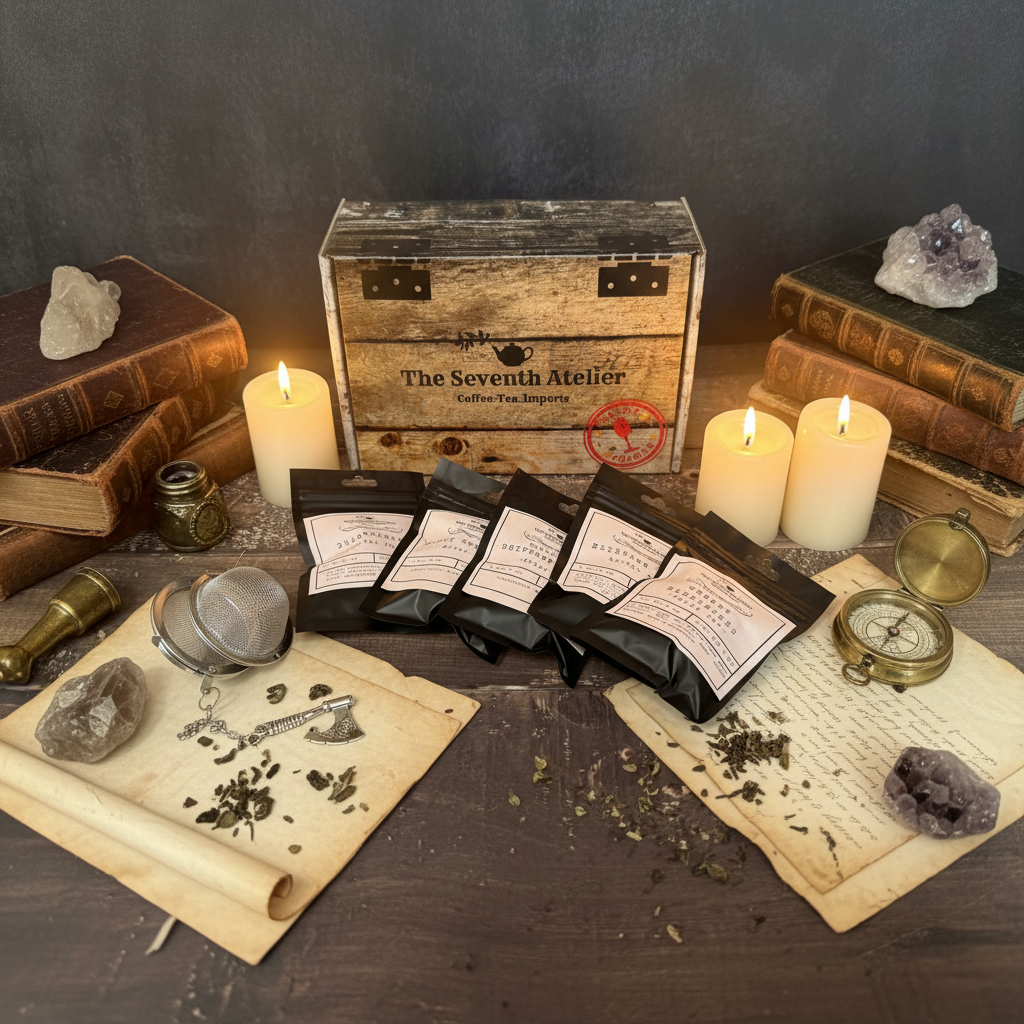
Acquire the Official Field Kit!
Practice all exercises with the teas selected for each stage. The Archive Kit includes all the teas mentioned in this training manual needed for the full experience.
Secure the Field KitChapter Four: Practical Exercises for Palate Development
Theory is useful, but practice is essential. Here are specific exercises to develop your palate, arranged from beginner to advanced.
Exercise 1: The Basic Taste Test (Beginner)
Prepare five small cups of water, each with a different basic taste:
- Sweet: Add a pinch of sugar
- Sour: Add a drop of lemon juice
- Salty: Add a tiny pinch of salt
- Bitter: Add a tiny bit of unsweetened cocoa or very strong black tea
- Umami: Add a drop of soy sauce
Taste each one and notice where on your tongue you detect it most strongly. This calibrates your awareness of basic tastes. Now, when you taste tea, you can identify which basic tastes are present.
Exercise 2: The Aroma Identification Game (Beginner)
Gather common aromatic items: vanilla extract, lemon peel, cinnamon stick, fresh mint, honey, a piece of dark chocolate, etc. Smell each one individually, closing your eyes and really focusing on the scent. Try to memorize it.
Now, when you smell tea, you have a reference library. "This smells like... vanilla! And maybe a hint of honey." You're building your aromatic vocabulary.
Exercise 3: The Same Tea, Different Temperatures (Intermediate)
Brew a single tea and taste it at different temperatures: very hot, warm, room temperature, and cold. Notice how the flavor changes. Some notes emerge when hot, others when cool. This teaches you that temperature dramatically affects perception.
I recommend trying this with our Bergamot Rain Cloud Earl Grey—the bergamot becomes more pronounced as it cools, while the black tea base is more prominent when hot.
Exercise 4: The Steeping Time Experiment (Intermediate)
Brew the same tea at three different steeping times: under-steeped (1-2 minutes), properly steeped (3-4 minutes), and over-steeped (6-7 minutes). Taste them side by side.
Notice how under-steeping creates weak, thin flavor. Proper steeping reveals complexity and balance. Over-steeping brings out bitterness and astringency. This teaches you to recognize optimal extraction.
Exercise 5: The Comparative Tasting (Advanced)
Brew two similar but different teas side by side. For example:
- Two different black teas
- Two different green teas
- The same tea from two different harvests or regions
Taste them alternately, cleansing your palate with water between sips. What differences do you notice? This is how you develop the ability to distinguish subtle variations.
Exercise 6: The Blind Tasting Challenge (Advanced)
Have someone prepare 3-4 teas without telling you which is which. Taste them and try to identify: Is it black, green, oolong, or white? What flavors do you detect? Can you guess which tea it is?
This is humbling (I once confidently identified our Slumber Serum as a green tea—Seraphina has not let me forget it), but it's the fastest way to develop your palate.
Exercise 7: The Tasting Journal (Ongoing)
Keep a notebook dedicated to tea tasting. For each tea, record:
- Tea name and type
- Brewing parameters (temperature, time, amount)
- Appearance (dry leaves and liquor)
- Aroma (what you smell)
- Taste (what flavors you detect)
- Mouthfeel and body
- Overall impression
Over time, you'll notice patterns in your preferences and improvements in your ability to articulate what you're tasting. Mortimer maintains such meticulous records that he can tell you the exact flavor profile of a crumb from three months ago—you can develop similar precision with tea.

Chapter Five: Building Your Flavor Vocabulary
One of the biggest challenges in palate training is finding words to describe what you're experiencing. Here's a framework to help you articulate flavors:
Common Tea Flavor Categories:
Floral: Rose, jasmine, orchid, honeysuckle, lavender, chamomile. Common in white teas, oolongs, and scented teas like our Queen's Crown Jasmine Pearls.
Fruity: Stone fruit (peach, apricot), citrus (lemon, orange, bergamot), berries, apple, pear. Common in oolongs and flavored black teas.
Vegetal/Grassy: Fresh-cut grass, seaweed, edamame, spinach, artichoke. Common in green teas, especially Japanese varieties. (Check out our Solstice Moon Green)
Nutty: Almond, hazelnut, chestnut, walnut. Common in roasted oolongs and some black teas. Our Redstone Tea has beautiful hazelnut notes.
Malty/Grainy: Barley, oats, toast, bread, honey. Common in Assam black teas and some oolongs.
Woody/Earthy: Cedar, pine, forest floor, mushroom, wet stone. Common in aged teas and pu-erh.
Spicy: Cinnamon, clove, pepper, ginger. Can be natural or from added spices.
Sweet: Honey, caramel, vanilla, brown sugar, molasses. Common in oxidized teas and naturally sweet teas like rooibos.
Mineral: Wet stone, slate, metallic. Common in certain oolongs and high-mountain teas.
Smoky: Campfire, tobacco, leather. Common in lapsang souchong (see Dragonfire Cinders) and some aged teas.
Don't feel pressured to use "correct" descriptors. If a tea reminds you of your grandmother's kitchen or a rainy forest, that's valid! Personal associations are part of your unique palate.
Chapter Six: Common Palate Training Mistakes
In my years of tea exploration, I've observed (and committed) numerous errors. Allow me to save you from the most common pitfalls:
Mistake #1: Trying to Taste Too Much Too Fast
Palate fatigue is real. After 5-6 teas, your ability to distinguish flavors diminishes dramatically. Quality over quantity—taste fewer teas with full attention rather than many teas with diminishing returns.
Mistake #2: Comparing Yourself to Experts
Professional tea tasters have decades of experience and have tasted thousands of teas. You're a beginner. That's okay! Focus on your own progress, not on matching expert-level descriptions.
Mistake #3: Thinking There's a "Right" Answer
If you taste strawberry and someone else tastes raspberry, neither of you is wrong. Palates are individual. Trust your own perceptions.
Mistake #4: Neglecting Brewing Fundamentals
You cannot accurately assess a tea if it's poorly brewed. Master proper brewing first, then work on palate training. Otherwise, you're training your palate to recognize badly made tea.
Mistake #5: Tasting Only One Type of Tea
If you only drink black tea, you'll never develop the ability to appreciate green tea's subtlety or oolong's complexity. Variety is essential for palate development.
Mistake #6: Giving Up Too Soon
Palate training takes time—weeks to months to see significant improvement. Be patient with yourself. Every tasting session, even if it feels unproductive, is building your skills.
Chapter Seven: A Suggested Training Program
If you're wondering how to structure your palate training, here's a progressive program I recommend:
Week 1-2: Foundation
- Do the basic taste test exercise
- Do the aroma identification exercise
- Taste one tea daily using the five-step tasting technique
- Start your tasting journal
Week 3-4: Exploration
- Try one tea from each major category (white, green, oolong, black, rooibos)
- Do the temperature experiment with one tea
- Do the steeping time experiment with one tea
- Continue journaling
Week 5-8: Comparison
- Do comparative tastings: two black teas, two green teas, etc.
- Try to identify specific flavor notes using the vocabulary list
- Taste the same tea multiple times to notice consistency and variation
- Continue journaling and review your earlier entries—notice your progress!
Week 9-12: Refinement
- Attempt blind tastings
- Focus on detecting subtle differences between similar teas
- Experiment with multiple infusions of the same leaves
- Share tastings with others and compare notes
Ongoing: Maintenance and Growth
- Taste mindfully at least 3-4 times per week
- Regularly try new teas to expand your reference library
- Revisit familiar teas to notice how your perception has changed
- Continue journaling—it's the best way to track progress

Acquire the Official Field Kit!
Practice all exercises with the teas selected for each stage. The Archive Kit includes all the teas mentioned in this training manual needed for the full experience.
Secure the Field KitChapter Eight: Recommended Teas for Palate Training
Not all teas are equally useful for training. Here are my recommendations for building a palate-training collection:
For Learning Basic Tea Types:
- Bergamot Rain Cloud Earl Grey - Classic black tea with distinctive bergamot aroma. Teaches you to identify citrus notes and black tea characteristics.
- Emerald Willow Tendrils - Japanese Sencha green tea. Teaches you vegetal, grassy, and umami notes. Also teaches the importance of proper temperature!
- Queen's Crown Jasmine Pearls - Scented tea with clear floral notes. Teaches you to distinguish between tea base and added aromatics.
- Redstone Tea - Rooibos with hazelnut. Teaches you nutty, sweet, and earthy notes. Also caffeine-free for evening practice.
For Developing Specific Skills:
- Stonehammer Steep - Robust black tea. Teaches you to identify malty, bold characteristics and understand body and strength.
- Slumber Serum - Herbal blend. Teaches you to identify individual herbs in a blend (chamomile, lavender, etc.).
- Paradox Petals - Butterfly pea flower. Teaches you about visual cues and how color affects perception.
A Final Word of Encouragement
My dear student, palate training is a journey, not a destination. I have been drinking tea for decades, and I still discover new flavors, new nuances, new depths in teas I thought I knew completely. This is not a failure of my palate—it's the endless delight of tea.
You will have sessions where you taste nothing but "tea-flavored water." You will have moments of doubt where you wonder if you're making any progress at all. You will taste a tea that everyone else raves about and think, "I don't get it."
This is all normal. This is all part of the process.
But you will also have breakthrough moments—the first time you detect a specific note you've been trying to identify, the day you realize you can distinguish between two similar teas, the moment you taste something and immediately know it's been over-steeped or brewed at the wrong temperature. These moments of clarity are profoundly satisfying.
Remember: The goal is not to become a tea snob who can only enjoy "perfect" tea. The goal is to deepen your appreciation, to extract more pleasure and understanding from every cup, and to develop a skill that will serve you for a lifetime.
A trained palate doesn't make tea less enjoyable—it makes it more enjoyable. You'll find complexity where you once found simplicity, nuance where you once found uniformity, and endless fascination where you once found routine.
So begin. Brew a cup. Taste it with full attention. Notice what you notice. Write it down. Do it again tomorrow. And the day after that. And slowly, gradually, almost imperceptibly, your palate will awaken.
And one day, you'll taste a tea and think, "Ah, yes—I detect notes of honey, a hint of stone fruit, and a lovely smooth mouthfeel with just a touch of astringency in the finish." And you'll realize: you've become a tea taster.
Welcome to the journey. I'm honored to be your guide.
Yours in the pursuit of refined perception,
Professor Eldrin Nightshade
Alchemist, Proprietor, and Perpetual Student of Flavor
The Seventh Atelier
P.S. - Mortimer wishes to add that palate training also applies to crumbs, and he is available for consultation on the subject. I have reviewed his notes, and I must admit, his ability to distinguish between scone crumbs from different batches is genuinely impressive. Perhaps we all have more to learn from our tiny scholar than we realize.
P.P.S. - If you're feeling overwhelmed by all this information, start simple: just taste one cup of tea today with full attention. Notice what you notice. That's enough. Everything else builds from that single act of mindful tasting.
#PalateTraining #TeaTasting #TeaEducation #FlavorVocabulary #ProfessorNightshade #TheSeventhAtelier #TeaConnoisseur #LearnTea #TasteTraining #TeaSkills